1997: My First Band Performance Trip to Europe-Flying to Europe & Paris
Part 1: Jacksonville to Paris
I’ve always been a little sentimental about memories. When I was a kid in the 1960s, I spent hours at my grandparents’ house looking through old black-and-white family photos. They were kept in what everyone called the “middle room,” in the bottom right-hand drawer of a dresser, and most of them dated from the 1930s and 1940s. My Uncle Bob, my grandparents’ oldest child, had gotten interested in photography in college, and he’d left an extensive collection of photographs behind in that drawer.
I’d sit on the floor and sort through those faded prints, picking out relatives in their younger days: a grandparent I only knew as gray-haired, standing tall and slim in a suit; my parents before they were my parents; or some unknown relative dressed to the nines in their Sunday best. But what really caught me were the places. Every photo was a little window into somewhere else. It didn’t matter if that “somewhere else” was just back home in South Carolina, a Sunday afternoon at the zoo, or a deserted railway line out in the middle of nowhere. I dreamed about distant places and new locales long before I ever had the chance to see one.
Later, when I was in college, Charlotte and I wrote letters to each other, real handwritten letters, and we still have them today. It’s funny: when I read them now, I can recall exactly where I was, what was happening, and what we meant by every reference, even the ones that wouldn’t make a bit of sense to anyone else. Something about putting pen to paper locks a memory in place.
I suppose that’s why, when I was about to leave on a big trip to Europe, I bought a leather-bound journal to record my thoughts, reflections, and memories along the way. I had no idea it would be the first of many journals in which I would scratch out and sketch my memories.
A Band Director with a Plan
In June 1997, I set off with my band students on a performance tour of Europe. This wasn’t my first trip to Europe with students, but it was the first time we packed up our horns and took our show on the road across the pond. In the months leading up to our departure, we spent many Sunday afternoons rehearsing and putting together our concert program. Each rehearsal also included time to learn about our destinations and to work out the details of the tour.
To plan and run the tour, I hired EF Educational Tours, a student tour operator. Those of you who’ve known me for a while know that my experiences with EF ultimately became the reason I started my own tour company, David McGuffin’s Exploring Europe. But that’s a story for another day! Back in 1997, I didn’t have the know-how or the resources to put together a trip to Europe on my own, much less a performance tour with instruments, concert venues, and a busload of teenagers. So I relied on EF to handle our accommodations, transportation, meals, and performance venues.
That doesn’t mean I sat back and waited. I spent most of the year before the trip working out the tour route, the destinations, the concert locations, and even some of the hotels with EF. I’d never done anything like that before; on earlier trips I’d always left it all to “the tour company.” I remember Matt, his dad, Michael Chumbley, and I spending hours at a copy machine, running off pages from Rick Steves’ guidebook so every student could carry a little piece of Europe in their bag. Looking back, I think that year of planning was when the bug really bit me.
June 5, 1997: Departure Day
We were up at 7:00 that morning in Middleburg, Florida, doing all the last-minute things that always make me late. Why Charlotte picked that particular day to get her hair cut and styled is still beyond me, but she did. By 8:30 I was out the door, racing between the bank, the school, and a list of final errands. The most important stop was the bank, where I picked up our American Express Traveler’s Checks, which in 1997 was how a responsible person carried money overseas.
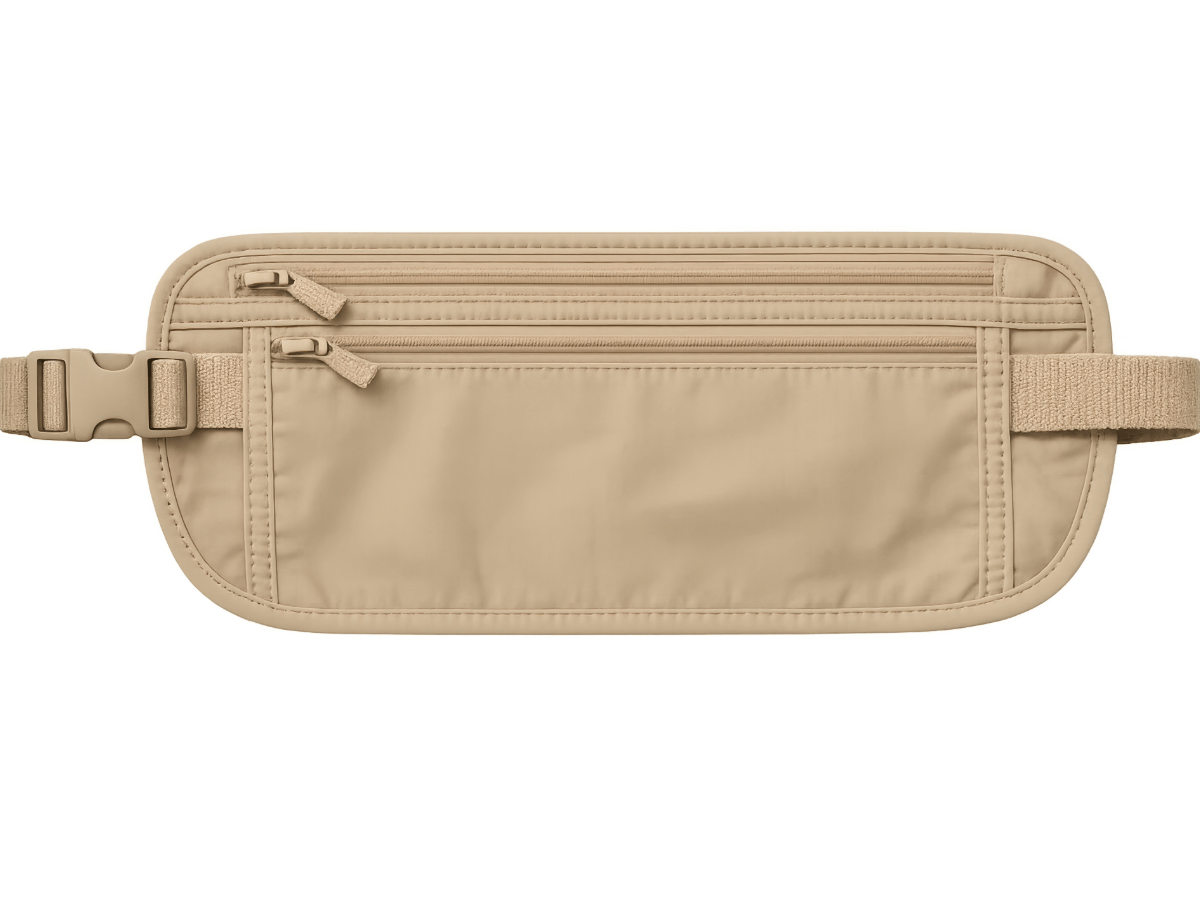
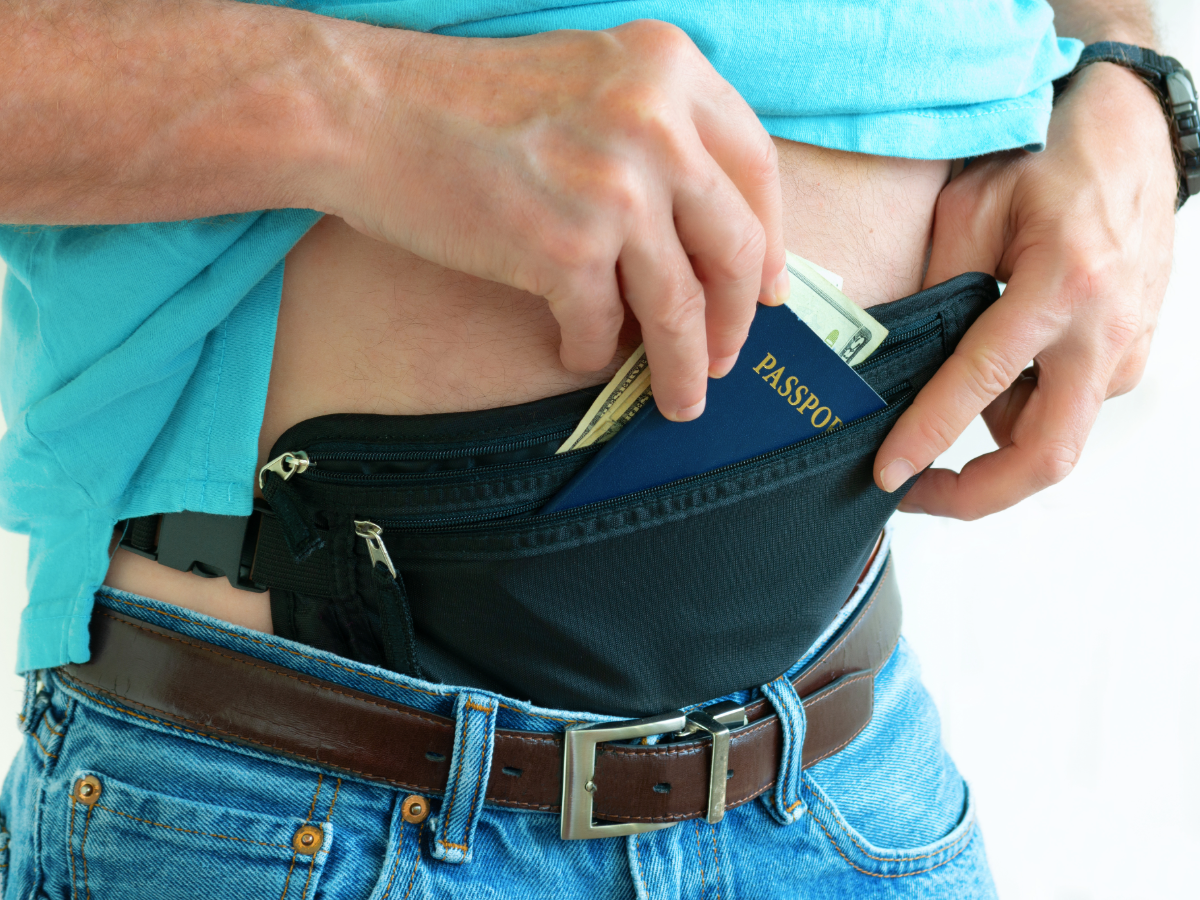
I made it back home around 10:00 and met up with my kids and a few friends for the drive to the airport. We still had to swing by the beauty parlor to collect Charlotte and Brian, and by the time we pulled in, it was pouring rain. After the first of what would become many “passport and money belt checks,” we were finally on our way.
We reached the Jacksonville airport at 11:35 and found the Continental Airlines check-in desk. An agent named Benny took our group under his wing. He was a tremendous help getting everyone checked in and, most importantly, getting all of our instruments on board free of charge. Anyone who has ever traveled with a band knows what a gift that was. By 12:30 the entire group was checked in, and we all walked down to the gate together.
And what a scene that gate was. In those days, before security lines kept everyone but passengers out, families could walk all the way to the gate, and they did. Parents crowded around their teenagers for one last hug, one last reminder, one last photo. One of my students, Sarah, told me years later that her mom cried at the gate and that she was mortified her mother made such a scene. Another, Heather, wondered what the other passengers must have thought as a huge group of excited teenagers piled onto the plane. I’ll admit I didn’t notice the crying parents much myself. I had my own family right there with me: not just Charlotte, Jamie, and Brian, but my mom and my aunt as well. For me, this trip was a family affair, and beyond my own family, I had an extended family of band kids and parent chaperones, too!
At 2:30 we lifted off from Jacksonville, and the adventure officially began.
About two hours later we arrived in Newark. On the approach, the plane passed over Manhattan, and I got my very first look at New York City. The Empire State Building, the Twin Towers of the World Trade Center, the Statue of Liberty standing out in the harbor: they were pretty darn impressive, especially to a country boy from Middleburg. I pressed my face to the window like one of my students.
When I was writing this chapter, I went back to check my original journal, and sure enough, I had written that this was my very first look at New York City. But then I opened my journal from twenty years earlier, from my first-ever flight and tour in 1977, and found almost exactly the same words. So now I don’t know which is true. Could I have forgotten seeing the New York skyline from an airplane window twenty years before? I’ll never know. But I think we can all agree that New York Harbor was an impressive sight in the days before the world changed on September 11, 2001.
To get into the European spirit, we ate pasta at Sbarro in the Newark terminal, then settled in for a two-hour wait. We boarded Continental Flight 56 at 7:25 and were off the ground by 8:30, pointed east across the Atlantic.
The flight itself was uneventful, at least for me. I took two Bayer PM, put in my earplugs, pulled on an eye mask, and slept most of the way. The students, I learned later, had a slightly different experience. Kara and her friend Jessie were seated directly behind Charlotte and me, and Kara wrote in her own journal that night that they couldn’t move around much, “or else we’ll bump their seat and they give us dirty looks.” I have no memory of giving anyone dirty looks. I was asleep. But I’ll take her word for it.
Looking back: When I reread those first pages of my journal ten years later, and again now, nearly thirty years on, I was struck by how much had changed. Traveler’s Checks, Bayer PM, eye masks, quick airline check-ins, walking family and friends all the way to the gate, and the World Trade Center are all things of the past. Now I use my debit card to pull local cash from an ATM, tap to pay with contactless cards, have a glass of wine instead of a sleeping pill, and wear my cap in place of an eye mask. And the Twin Towers I marveled at from that airplane window are gone.
June 6, 1997: Arrival in Paris
Our flight touched down at Paris’s Charles de Gaulle Airport at 9:15 in the morning. We came through the old Terminal 1, and I remember thinking I’d seen the place before, in a James Bond movie. Terminal 1 opened in 1974, a huge round concrete building that the French nicknamed “the Camembert” because of its shape. In the middle is an open central well, crisscrossed by glass-covered tubes holding inclined escalators and moving walkways that carry passengers up and down between levels. In 1997 it still felt futuristic. Clearing customs was a breeze.
Over the years I’ve been through Terminal 1 many times. By 2007 it was looking worn, and every time I passed through, crews seemed to be putting up new sheetrock, moving barriers, and rearranging the layout. In 2011 the remodeling was still going on, though by then it was mostly painting and traffic routing. Those escalator tubes still harken back to the 1970s, but in a nice, nostalgic way.
Waiting for us on the other side of customs was Lisa, our EF tour guide. Lisa was every inch a Parisian: very chic, always poised, never once seen in jeans, with her hair pinned up in a perfect French twist. Kara mentioned years later that of all the things she’d forgotten about the trip, she never forgot how French Lisa was. It’s funny what sticks with you.
The bus ride from the airport into central Paris was a rolling celebration. Students marveled at road signs in a “foreign language,” pointed at the tiny, fast cars darting around us on the highway, and craned their necks trying to be the first to spot the Eiffel Tower on the skyline.
Our private bus took us to our hotel, the Residence Internationale de Paris, at 44 rue Louis Lumière, out in the 20th arrondissement on the eastern edge of the city. It sat in a residential neighborhood with quite an eclectic population. My first impression was that it was okay: comfortable enough, but hot. There was no air conditioning in the rooms, and early June in Paris was already warm. I figured the place called itself a “residence” because some people seemed to live there on long-term arrangements. Many of the residents appeared to have physical disabilities, and I wondered whether it was some sort of rehabilitation facility that also rented rooms to groups like ours.
Our rooms weren’t ready yet, either. Kara wrote in her journal that day that it was “so hot in Paris” and that “McGuffin said we couldn’t change our pants.” She asked me years later why on earth she’d felt the need to write that down. I couldn’t tell her, but I’m glad she recorded it. It adds a lot to the story.

While we waited, we gathered in the hotel’s conference room. Lisa gave us an overview of the tour, made introductions, and briefed us on Paris and how to navigate the Métro. Then it was time to go out and meet the city.
Into the Métro
We took the Métro from the hotel toward the Montmartre area, a trip that required changing trains at an underground station partway there. For me, this was the most nerve-wracking part of the day. Most of my students had never been on a subway in their lives, and now I was herding a group of them through crowded tunnels and onto trains that waited for no one, counting heads at every platform. It was a learning experience for everyone. But everybody made it — no one lost, no one upset, and no one robbed. At least not yet.
We surfaced at the Anvers station, and stepping out of that stairway was a cultural shock for all of us. Lisa wanted to point out the station’s historic Art Nouveau entrance. Paris’s original Métro entrances were designed by the architect Hector Guimard around 1900, with green cast-iron railings shaped like plant stems and the word “Métropolitain” in flowing letters. They’re treasured landmarks today, and I’ve come to love them. But in that moment, I wasn’t looking at the ironwork. I was trying to keep my group together, safe, and clear of the vagrants and drunks scattered along the sidewalk. We’d popped up in the median of the Boulevard de Rochechouart, a stretch of Paris that, along with the neighboring Boulevard de Clichy, is known for sex shops, prostitutes, vagrants, and litter. Not exactly the postcard I’d promised the parents back home.
You can see in the photo that many of us had already moved our backpacks around to our fronts. We were going to need every precaution. Things went from bad to worse as we crossed the street and began our en masse tourist trek up the Rue de Steinkerque, the narrow, crowded street of souvenir and fabric shops that leads toward the Sacré-Cœur. Michael, Matt’s dad and one of the parents traveling with us, quickly became the prime target of a gang of small children working as pickpockets. I couldn’t really blame them. Michael was wearing a large backpack and had several cameras strung around his neck, and that getup, combined with khaki pants, white tennis shoes, and a straw hat, marked him unmistakably as an American tourist. More than once he had to physically fight them off as they went for his pockets.
He wasn’t the only one who had to defend himself that afternoon. One of my students, Jason, actually kicked a pickpocket who got too close. And at one point a man reached out and started touching Rhonda’s blonde hair. I’d brought a walking stick along on the trip, and I found myself shaking it at him until he backed off. Kara later wrote that she loved that I’d brought a walking stick to Europe. I suppose it earned its place in my luggage that day.
The Sacré-Cœur
At last we reached the top of the Rue de Steinkerque and came to a park at the foot of the hill, with several steep stairways climbing up toward the Sacré-Cœur, a gleaming white basilica perched at the very top of Montmartre. I remember thinking, “Whew. We survived that, and now we’re finally safe.”
We all huddled around Lisa like chicks around a mother hen while she gave us her talk about the area and its history. Then, just as I was beginning to relax, she suggested we split up and find lunch on our own. Alarm bells went off in my head. After what we’d just walked through, I wasn’t about to release my students to wander the neighborhood in search of food. So instead, we all walked across the street and bought lunch at a hot dog stand.
Lunch was a hot dog with cheese for 15 francs (about $2.50) and a Diet Coke for 10 francs (about $1.75). What a way to begin a tour of France, the culinary capital of the world.
After lunch, we hiked up the steps to the basilica. There are more than two hundred of them, and by the top, everyone was ready to pause and catch their breath. The Basilica of the Sacré-Cœur, the “Sacred Heart,” is younger than it looks. Construction began in 1875, in the years after France’s defeat in the Franco-Prussian War and the upheaval of the Paris Commune, and the church wasn’t consecrated until 1919. It’s built from a special travertine stone that releases calcite when it rains, which is why it stays so brilliantly white even after more than a century of Paris weather and pollution.
The interior was a disappointment that day. It was under renovation, with scaffolding everywhere. But the view from the top of the hill made up for it. From the steps of the Sacré-Cœur you can see all of Paris spread out to the south, a sea of gray rooftops and chimney pots stretching to the horizon. If you lean out and look past the trees to the right, you can even spot the Eiffel Tower, the landmark the students had been hunting for since the airport.
Montmartre and the Artists
From the basilica, we walked around the corner into Montmartre itself, the old village on the hill that has drawn painters, poets, and musicians for well over a century. In the late 1800s and early 1900s, the cheap rent, the cabarets, and the bohemian atmosphere attracted artists like Renoir, Toulouse-Lautrec, Picasso, and Modigliani. Picasso worked in a ramshackle studio building nicknamed the Bateau-Lavoir, the “laundry boat,” where struggling artists lived and worked side by side, staying up all night and sleeping through the day. Montmartre became synonymous with artistic creativity, and that reputation still pulls in crowds today.
The artists are still there, too, gathered in and around the Place du Tertre, the old village square, sketching, painting, and selling portraits to visitors. Some of them are very good. Some of them are very persistent. Sarah, Sabrina, and Carey eventually caved in to the constant hounding and “commissioned” sketches of their own, at prices ranging from 20 francs for a black-and-white sketch up to 150 francs for a color portrait.

Years later, when I first shared that photo online, Sabrina wrote to say it was priceless. She’d never gotten a picture of her bohemian artist herself.
Montmartre hasn’t changed much in thirty years. When I brought my students in 1997, it was exactly as it is today. As you round the corner to the left of the Sacré-Cœur, the sketch artists form a gauntlet and pester everyone who passes about posing for a portrait. Many use a bait-and-switch: they snag a tourist as a “model” so they can practice their craft, and when the sketch is finished, they insist on “giving” it to the subject, but only if they pay for it.
My advice is to ignore that first wave of sketch artists and keep walking. The better professionals work in the Place du Tertre itself. In March 2011, after a week of scouting the artists there, I finally gave in and paid for a portrait of my own. The artist, an elderly gentleman who looked like Santa Claus, held me captive for about forty-five minutes and produced a pretty good portrait.


I was feeling surprisingly good that first afternoon, with not much jet lag, which I credited to sleeping on the flight over. Not everyone was so lucky. Holly had become sick and was throwing up, and Leslie wasn’t feeling well either. All I could think of was how miserable I’d felt in Amsterdam in 1995, and my heart went out to them. There’s more to that 1995 Amsterdam story, but it will have to wait for another chapter.
Les Halles and a Giant Head
From Montmartre, we took the Métro to the Sentier station and walked over to the Rue Montorgueil, an old market street lined with outdoor fruit and vegetable vendors. After a short walk through heavy traffic, we arrived at the gardens of Les Halles.
For more than eight hundred years, Les Halles was the great central food market of Paris, the place the novelist Émile Zola called “the belly of Paris.” In the 1850s and 1860s it was rebuilt with enormous iron-and-glass pavilions designed by Victor Baltard. But by the 1960s the old market couldn’t handle a modern city’s traffic, and in 1971 the wholesale market moved out to the suburbs and the beautiful pavilions were torn down. In their place came the Forum des Halles, an underground shopping mall, and beneath it one of the busiest train stations in Paris. Even in 1997, I thought it was a pitiful trade.
My son Brian had decided to bring his skateboard on this tour, and there he was, our very first day in Paris, toting it around all day in a special backpack built to carry a board. I don’t think it touched the pavement once that first day.
In the Place René Cassin, beside the great Gothic church of Saint-Eustache, we came upon a giant stone sculpture by Henri de Miller called L’Écoute, which means “Listen.” Installed in 1986, it’s a massive sandstone head lying on its side, its cheek resting in a cupped hand as though listening to the ground. It weighs about seventy tons, and the students couldn’t resist posing in front of it.
Dinner at the Hippopotamus
By this point, my hearty hot dog lunch had long since worn off, and I was excited about eating our first “real” French restaurant meal. That turned out to be at the Hippopotamus, a big French steakhouse chain. There we dined on the gourmet French delicacies of white rice, chicken kebabs, lettuce with dressing, and chocolate mousse. I bought a “Coke Light,” as Diet Coke is called in Europe, for 10 francs.
Looking back, that meal, along with the hot dogs, was one of the main reasons I eventually struck out on my own and founded David McGuffin’s Exploring Europe. There is so much more to Parisian cuisine than chicken kebabs and white rice, and I wanted the travelers I brought to Europe to experience it. Nowadays, after we climb the steps to the Sacré-Cœur and fight our way through the artist gauntlet, we settle into one of the cafés around the Place du Tertre for soup, a salad, or a plate of cheese, with a coffee or a glass of wine. The ambiance is divine. For a more substantial dinner, walk down the hill along the Rue Lepic to Le Moulin de la Galette, a restaurant set inside one of Montmartre’s last two windmills. In the 1800s it was a famous open-air dance hall, the very spot Renoir painted in his Bal du moulin de la Galette.
And how about those prices? In 1997, the French franc was still the currency of France (the euro wouldn’t arrive in people’s pockets until 2002), and a dollar bought roughly five and three-quarter francs. That made the hot dog about $2.50, each Coke about $1.75, and the girls’ portraits anywhere from about $3.50 to $26. It all seemed like play money at the time.
Back to the Residence
After dinner, we took the Métro back to the hotel, a forty-five-minute ride with one transfer. When I finally reached my room, I was completely worn out and fell asleep immediately. The students, I’m fairly sure, stayed up most of the night playing cards in the third-floor lobby. Every so often I’d stir and hear them laughing outside my door.
I can’t leave our first day without saying a word about the hotel. The Residence Internationale de Paris was okay, but it was way, way, way out from the city center. It took a thirty-minute Métro ride with several changes just to reach the Latin Quarter, and the walk between the station and the hotel passed through a neighborhood that felt a little sketchy, with prostitutes working the streets. Don’t get me wrong: I even used the place once after I started my own company. But there is much better to be had in Paris for the price.
Kara, who was fourteen on this trip, wrote to me many years later that it made her a little sad to realize how much of the art, architecture, and culture had been lost on her teenage self. I understood completely. On my own first trips to Europe, I’d felt the same way, riding along on the bus without knowing which direction we were traveling, how far we’d come, or what waited at the end. That’s part of what drove me to plan this tour so carefully. And it’s part of why, from our grown-up vantage point, having a “do-over” of that trip would be kind of cool.
But the first day was done, and we’d survived it: the Métro, the pickpockets, the hot dogs, and all. The next morning would bring our first French breakfast, which, to a group of teenagers expecting something like an American continental buffet, turned out to be mostly croissants and lukewarm drinks. And somewhere ahead was a dinner Lisa announced as “couscous,” which Kara misheard as “goose” and worried about all day long.
We weren’t even out of Paris yet.