Mount Etna and the Gambino Family winery

Mount Etna and the Gambino Family winery

by David McGuffin

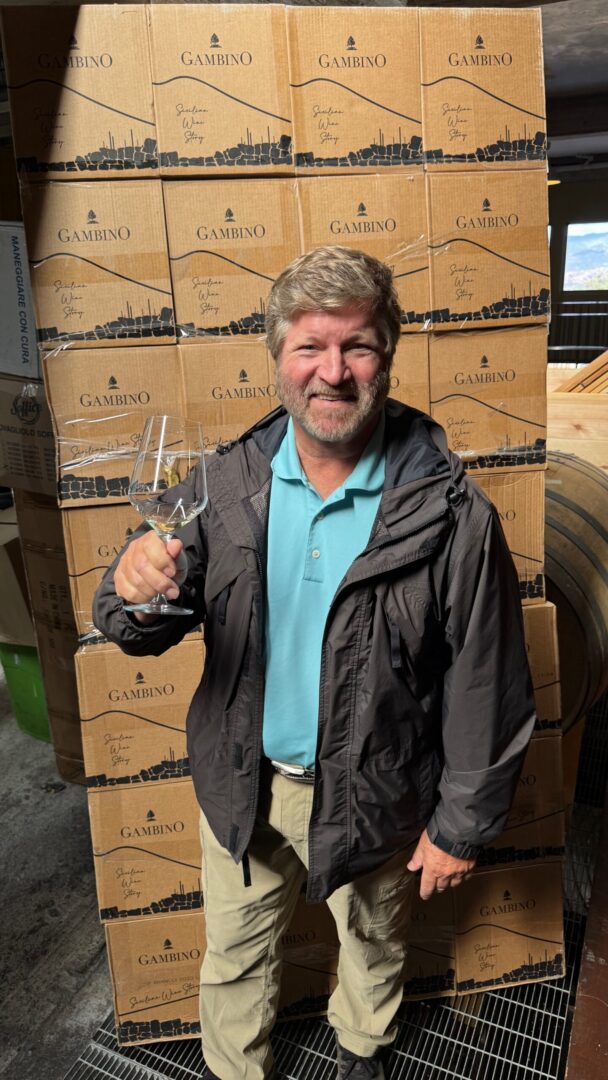
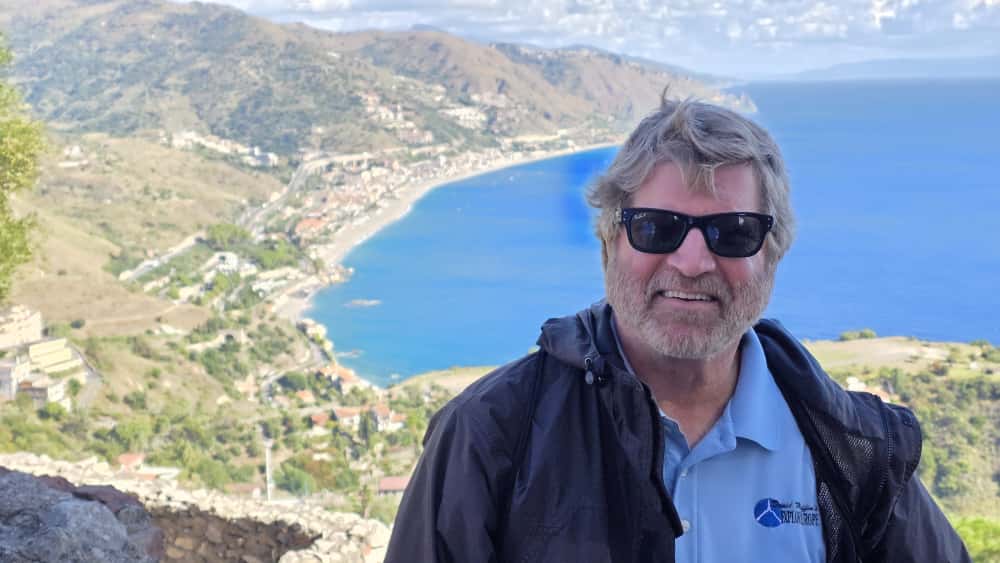
I was up on Mount Etna with my Sicilian friend, Paolo, a few months ago. After winding through the lava fields and trekking down into a crater, we had had all the cold and desolate volcanic slopes we could stand for the day. So we headed back down the northern slope of Etna to the Gambino family winery.

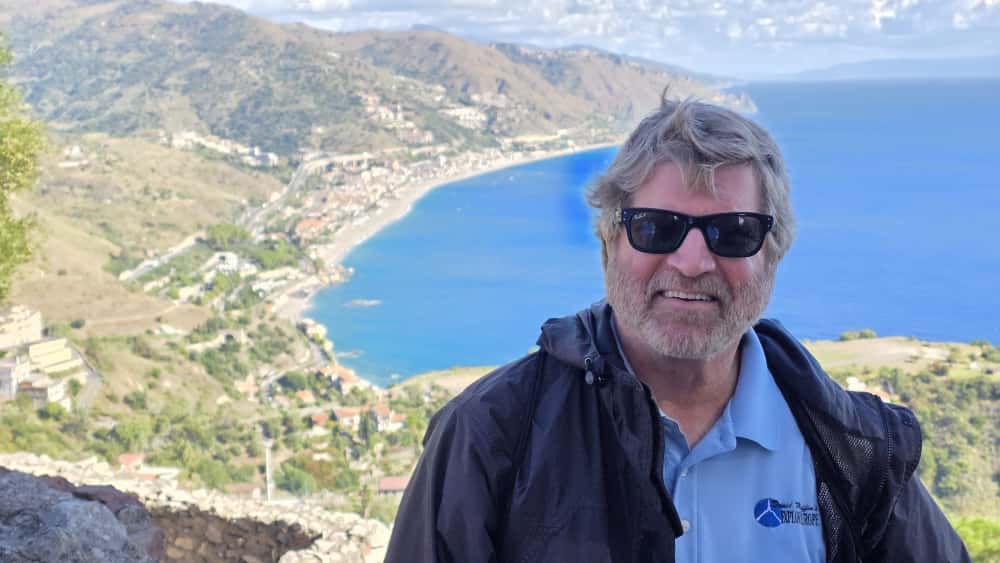
The Gambino estate sits at about 2,600 feet above sea level on the eastern slope of Mount Etna, perched right there in the National Park with views stretching across the Taormina coastline and the Mediterranean. Getting there means winding your way up mountain roads through volcanic landscape, and I won’t lie to you—the drive can be a bit nerve-wracking if you’re not used to mountain driving. But the moment you arrive and see those terraced vineyards spreading out with the sea glittering in the distance, you understand why this place is special.

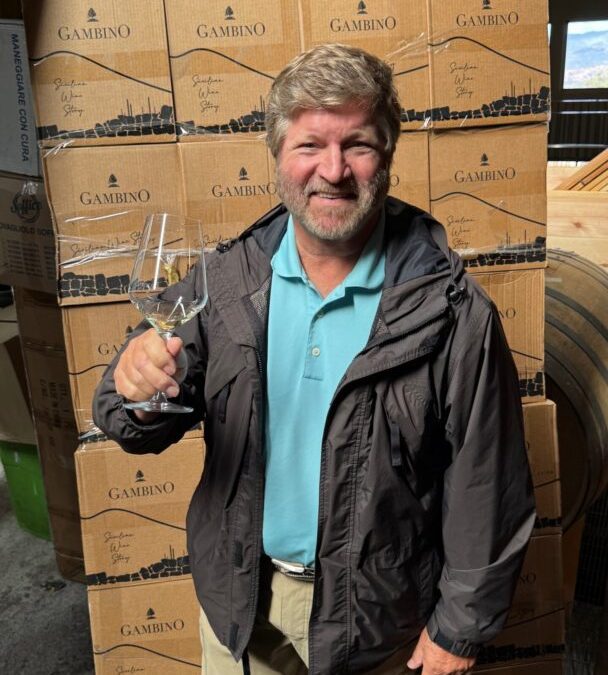
Here’s what makes Gambino extraordinary. This is a family operation that’s been at it for over twenty years, with the Raciti Gambino siblings—Francesco, Filadelfo, and Mariagrazia—pouring their hearts into every aspect of the winery. Francesco grew up watching his parents buy land piece by piece on Etna, and his mother Maria came from a long line of Etna vintners. You can taste it in the wines, and you can feel it in how the family welcomes visitors. When Filadelfo takes you down into their cellar—carved ten meters deep into volcanic rock—and explains their winemaking philosophy, you’re not getting a corporate tour. You’re getting invited into their passion.

The volcanic terroir here is remarkable. The soil is rich with minerals from Etna’s eruptions, and those high-altitude vineyards get that dramatic temperature swing between day and night that’s crucial for developing complex flavors in the grapes. They’re working with indigenous varieties—Nerello Mascalese and Nerello Cappuccio for the reds, Carricante and Catarratto for the whites. The Tifeo Etna Rosso has this beautiful pale ruby color with aromas that just keep unfolding—cherry, leather, coffee, vanilla. And the Tifeo Etna Bianco? It’s got this bright citrus character with touches of pepper. I could taste the soil and the sea breeze in it.

We booked their full experience—the wine tasting paired with food. They serve you five wines alongside a three-course meal of traditional Sicilian specialties, and their sommeliers know how to guide you through the pairings without being pretentious about it. The antipasti plate and the lentil and chickpea soup were perfect pairings with the wine. And that view from their terrace? Breathtaking doesn’t quite cover it. You’re looking out over terraced vineyards with the Mediterranean spread out before you, and you’re tasting wines that couldn’t come from anywhere else on earth.

The Gambino siblings practice sustainable viticulture—hand-picking their grapes, using natural pest control, doing things the way their parents and grandparents would recognize. But they’re not stuck in the past. They’ve married traditional methods with modern techniques to create wines that speak authentically to this place while meeting international quality standards. You can find their wines in restaurants, but experiencing them here, where they’re made, is something entirely different.

What I love about bringing people to Gambino is that authenticity. There’s no pretense here, no over-the-top wine snobbery. Just a family that loves what they do, making exceptional wines in one of the most dramatic settings you’ll find anywhere. They welcome you like you’re visiting their home—because you are. After your tasting and tour, you can browse their shop, stock up on bottles (they ship worldwide), and maybe grab some of their olive oil, which comes from trees growing at the same altitude as the vines.

The winery gets busy, especially in summer, so I suggest booking ahead. And yes, it takes effort to get there. But that effort is part of what makes it memorable. This isn’t a quick stop on a tour bus circuit. It’s a genuine experience with people who have deep roots in this volcanic soil, who’ve been dealing with Etna’s challenges and gifts for generations, and who make wines that taste like nowhere else on earth.

1977 Lunch in Rome on flight layover to Athens

David and Paolo

1977 Lunch in Rome on flight layover to Athens
Temple of Apollo Epicurius at Bassae

Temple of Apollo Epicurius at Bassae

by David McGuffin

I’ve been leading tours to Greece for years now, and I’ve found most travelers pack their itineraries with Athens and the islands—and don’t get me wrong, those are must-sees. But if you want to experience something truly special, something that’ll stick with you long after you’ve unpacked your suitcase back home, you need to make the trek to Bassae.


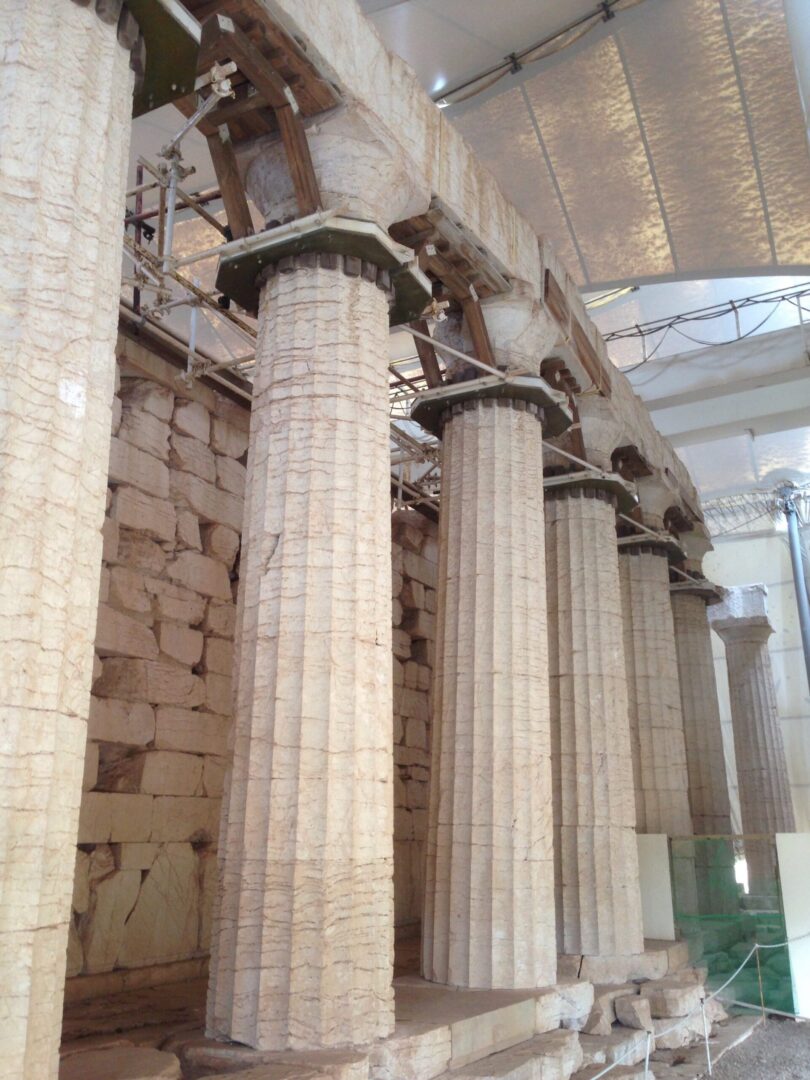
The Temple of Apollo Epicurius sits high up in the Peloponnese mountains at about 3,700 feet, perched on a remote mountainside that feels like the edge of the world. Getting there isn’t exactly a hop, skip, and jump—you’re looking at about an hour’s drive from the nearest town through winding mountain roads. But trust me, that journey is part of what makes this place so remarkable. When you finally arrive and see this ancient temple standing against the rugged Arcadian landscape, it hits you. This is what the ancient Greeks were all about—reaching for the divine in the most awe-inspiring places they could find.


Here’s what makes Bassae extraordinary. First, it’s one of the best-preserved Greek temples you’ll see anywhere, right up there with the Hephaisteion in Athens. The locals built it back in the 5th century BC, probably designed by Ictinus—yes, the same architect who worked on the Parthenon. They dedicated it to Apollo Epicurius, which means Apollo the Helper, supposedly after he protected them from a plague. And get this: unlike most Greek temples that face east-west, this one runs north-south. Some say it’s because of the steep terrain, others think it is aligned with an older temple on the site. Either way, it’s different, and different is good when you’re exploring ancient Greece.


Now, I won’t sugarcoat it—the temple is currently covered with a protective tent structure. It’s not the most photogenic thing you’ve ever seen (from afar). They shrouded the temple to prevent further weathering and decay, but the tent detracts from that “ancient ruins in the mountains” aesthetic we all love. The beautiful sculptural frieze that once decorated the interior—showing battles between Greeks and Amazons, and Lapiths and Centaurs—was carted off to the British Museum back in the day. I’ve seen those in London, as well, but that’s a whole other conversation, and one the Greeks aren’t too happy about.


But here’s the thing. Even with the tent and without the original sculptures, standing at Bassae is an experience you can’t get at the more famous sites. The remoteness that kept this temple remarkably intact for over two millennia is the same quality that makes visiting it feel like a genuine discovery. You’re not battling crowds or tour buses. Instead, you’re surrounded by wild, windswept mountains with views stretching across untamed valleys. That isolation lets you really feel what those ancient worshippers must have felt when they climbed up here to honor Apollo.


I can only bring my friends here when I’m driving with 4-6 people.  But when we get here, they always tell me Bassae was one of the tour’s highlights. It’s authentic. It’s dramatic. And it reminds you that the best travel experiences aren’t always the ones in the guidebooks—sometimes they’re the ones that take a little extra effort to reach.
1977 Lunch in Rome on flight layover to Athens
When History Gets Stolen: The Louvre Heist

When History Gets Stolen: The Louvre Heist

Last Sunday, I was on my way to church when I heard the news —the Louvre had been robbed. Not pickpockets lifting wallets from distracted tourists, mind you, but an actual heist. Four thieves with angle grinders and a furniture lift had just pulled off what authorities are calling one of the boldest museum robberies in modern history.

It happened Sunday morning, October 19th, at 9:30 a.m., while tourists queued outside, clutching their pre-purchased tickets and cameras. The crew scaled a furniture lift to a second-floor window of the Galerie d’Apollon, forced it open, and in seven minutes flat, smashed display cases and fled with eight pieces of Napoleonic jewelry—emerald necklaces, diamond tiaras, brooches worn by Empress Eugénie and Marie-Louise. They fumbled Empress Eugénie’s crown during their escape, damaging its 1,354 diamonds and 56 emeralds.

The haul? Prosecutors say $102 million, though officials call it “inestimable cultural and historical value.” President Macron called it “an attack on a heritage that we cherish.”

I’ve stood in that same Galerie d’Apollon, where the inscription above the door proclaims, “Opened 10 August 1793 by legislative action for all the people of France.” Entering the Galerie, you can’t help but look up, gaping open-jawed at the lavish decor… gold, gold, gold, everywhere! After a fire destroyed this palace wing, Louis XIV commissioned the Galerie in the 1660s and dedicated it to Apollo, the Greek god of the sun and arts.

The reports and news stories about the robbery continued all last week. Then, this morning, I heard reports that one of the thieves was arrested at Paris’ Charles De Gaulle Airport as he was preparing to leave the country. But, I can’t help but wonder: how does the world’s most-visited museum become vulnerable in broad daylight?

Join me in Paris, or almost anywhere in Europe!

Paris is my favorite big city in all of Europe. It has so much to offer, from museums like the Louvre, quaint neighborhood cafés, green parks, the Eiffel Tower, the Seine, fantastic food, and more. Where many tour companies “do Paris” in a whirlwind two-day tour, I’ve designed my tours to spend at least four days in the city. This gives you time to slow down and experience the City of Light, get out and explore on your own, while still seeing the major tourist sights with your local guide. Check out my Best of France, or London, Paris, Rome tours to savor Paris at a slower pace.

Discover the Best of Italy with David McGuffin

Discover the Best of Italy with David McGuffin

I’ve been traveling in Italy for the last few weeks and recently encountered a fellow who said he was touring Italy, too. We struck up a conversation and come to find out, he was on a big bus group tour and was visiting Rome today. This fellow was worn out, hot and sweaty, and decked out with a “whisper” audio device hanging around his neck, the earpiece dangling down to his knees. He said, “Rome is challenging. Fifty of us have followed this woman up there with the umbrella all morning. She’s Italian, with a heavy accent. She probably has some good information, but I keep falling behind and losing the audio signal, and when I can hear it, I can’t understand her.” He went on to tell me his tour had 50 passengers, and the tour was not at all like he had envisioned.  I chuckled and was reminded of this SNL skit with Adam Sandler, where he promotes the fictional Romano Tours to Italy.

This guy said he hoped he and his wife would have time to slow down, have a glass of wine, and enjoy Rome.  But, if today is like all the others, they would shuffle through their sightseeing, get back on their bus, and return to the hotel for a group dinner. He hoped to see Italy’s beautiful landscapes, learn about its history, and experience tasty pasta.  Instead, “we are led around like cattle, packed on a big bus, rushed through sightseeing, and whisked off to the next thing on the agenda.”

You Deserve a Better Tour Experience

If you are looking for a slower, more relaxed tour experience in Italy without the stress of massive tour groups, my Best of Italy Tour promises small groups (no more than 18 people) delivering an intimate European adventure that seasoned travelers rave about.

The Complete Italian Journey: 15 Days of Authentic Experiences

In 15 days, we will visit our favorite and famous destinations north of Rome. Beginning in Rome, you’ll experience the essential tourist sights and classic destinations. Then, travel to the delightful villages of the Cinque Terre, and enjoy two days exploring this coastal region where the mountains literally fall into the sea. Volterra, my choice for the quintessential Tuscan hilltown, is sure to win you over to the “la dolce vita” lifestyle. Florence, the “cradle of the Renaissance,” will have you walking in the steps of Michelangelo, DaVinci, and the Medici.  The romantic canal-laced city, Venice, rounds out the big three tourist sites.  Finally, we will cap off the tour by relaxing on beautiful Lake Como and then take a quick look at Milan’s bustling city center. (Watch David’s highlight video here.)

Marcampo cooking lesson

Why Travelers Choose our Best of Italy Tour

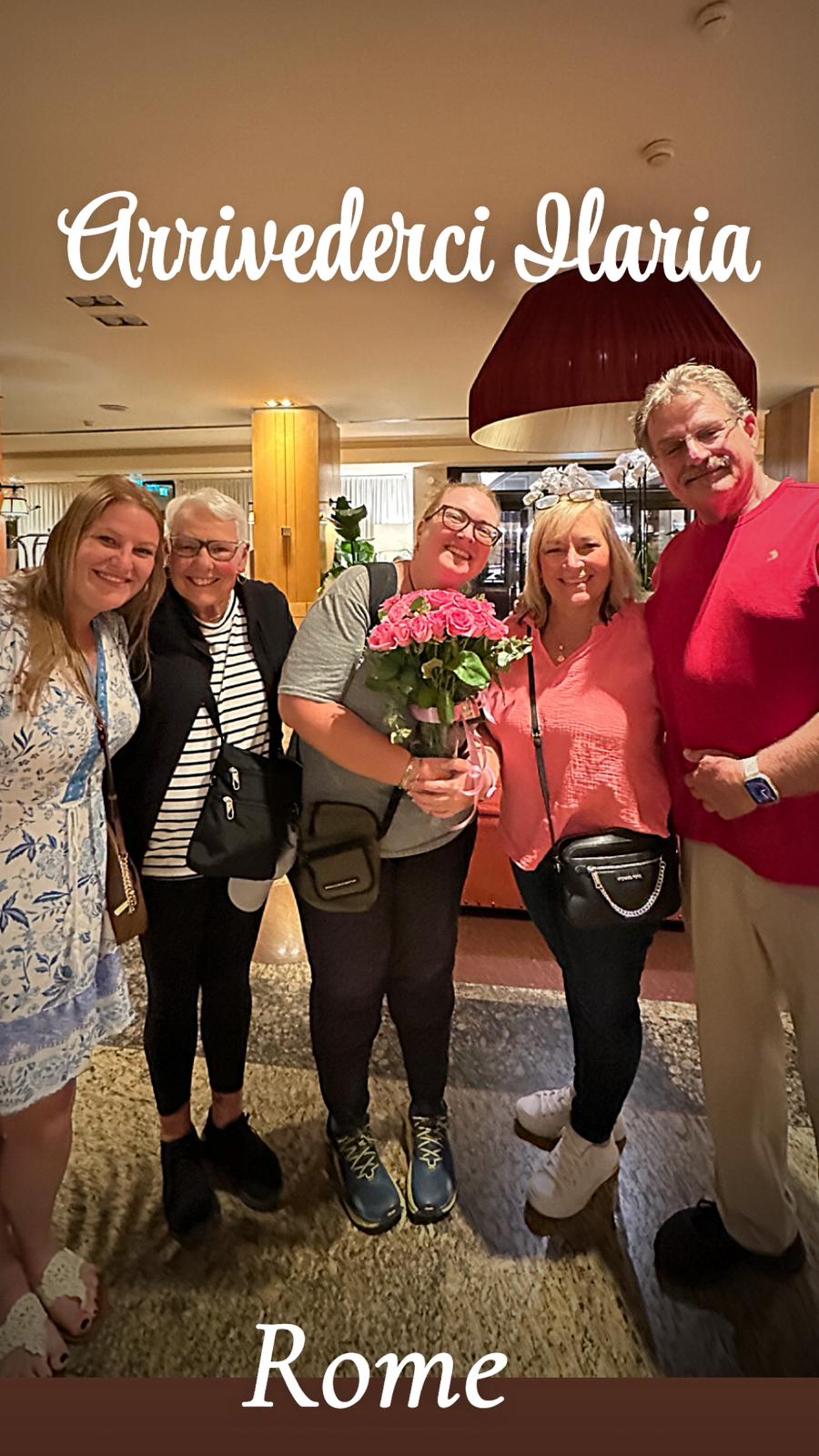
If you’ve been considering a big-bus or big company Italy tour, but want something more personal and off-the-beaten-path, my approach offers the perfect balance. Recent travelers praised their guide, Ilaria, for being “well organized and detailed” while “avoiding the tourist traps, selecting great restaurants serving authentic cuisine.”  You can read plenty of honest reviews and accolades here, https://davidmcguffin.com/testimonials-all/italy-tour-reviews/.

Unlike big bus tour operations, my mission is to encourage Americans to broaden their cultural mindset through engaging and exciting travel experiences in Europe, focusing on authentic connections rather than checking boxes on a rushed itinerary.

What Sets This Tour Apart for Discerning Travelers

Stress-Free Planning: No need to worry about tips and gratuities; we take care of all that.  Hotels are clean and safe, have private baths, and are in the center of the tourist sites and city centers. We include all your breakfasts and about half of your dinners in the costs.

Expert Local Knowledge: Tour leaders and local guides are experts who share destinations’ art, history, and culture, bringing each location to life with insider stories and hidden gems.

Flexible Pacing: The tour balances guided activities with free time, allowing you to explore independently or rest as needed. Physical activity is rated from “light” to “your choice,” accommodating different fitness levels.

Smart Travel Investment for Your Time and Budget

Given that you are laying down a sizable chunk of change for a tour, you deserve more than cramped buses and rushed schedules.  Value, comfort, authenticity, and meaningful experiences far outweigh bargain-basement prices. All our tours include guaranteed small groups of 6-18 travelers, all tours and admissions, traditional dining experiences at favorite restaurants, a full-time Exploring Europe guide, and plenty of free time to explore on your own.

Ready for Your Italian Adventure?

If you’re tired of reading about Italy and ready to experience it, my Best of Italy tour offers the perfect introduction to this captivating country. With decades of experience guiding Americans through Europe, David understands what travelers want: comfort, authenticity, and memories that last a lifetime. Don’t let another year pass, wondering “what if?” Italy is there waiting for you, and with our expert guidance, you’ll discover why travelers consistently rate this as a trip of a lifetime. Visit https://davidmcguffin.com/tours/italy-tours/ to begin planning your Italian adventure today.

2016 05 Venice_web
Experience Laid-Back Tuscany: My Villa Vacation Adventure

Experience Laid-Back Tuscany: My Villa Vacation Adventure

There’s something magical about slowing down in Tuscany. After years of crisscrossing Europe at a whirlwind pace, I’ve found that the best memories are often made when you simply let Italy happen around you. This week, I am trading the busy multi-country itineraries for a week at a sun-drenched villa near Volterra—and I can’t wait to share what makes this Tuscan Villa Vacation so special.

La Dolce Vita: Slow Mornings & Vineyard Views

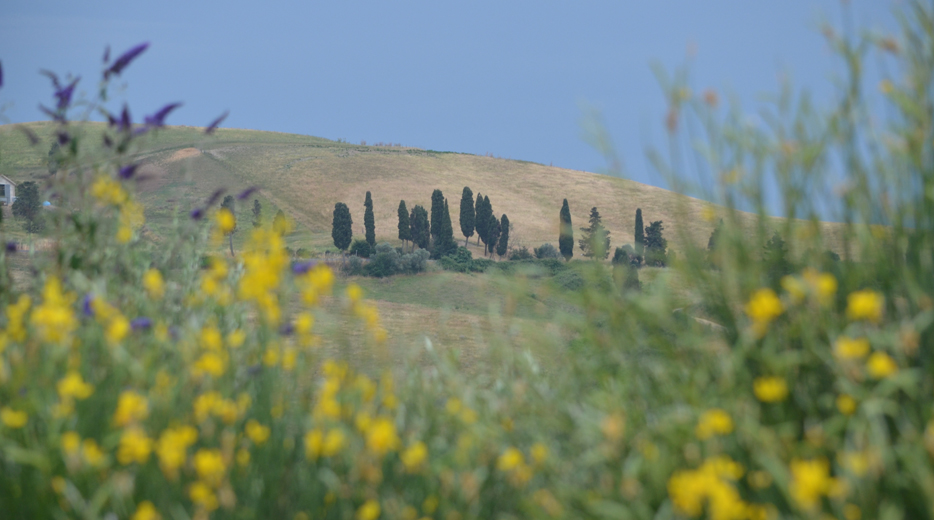
Waking up to rolling hills, sun baked wheat fields, fog settling in the valleys, and the scent of cypress trees and herbs, our days begin with strong coffee and no agenda. The villa—modern, comfortable, and perched right in the middle of a working vineyard—becomes our home base for a different kind of Italian adventure. Some mornings, I’ll wander the grounds or just relax by the pool, soaking up the peace that only Tuscany can deliver.

Cooking, Wine, and True Tuscan Hospitality

One of the highlights of this trip is rolling up my sleeves and putting on an apron, for a hands-on cooking lesson right in the villa kitchen. Guided by the Del Duca family, we will learn to craft traditional Tuscan dishes—then we will sit down together to enjoy the fruits of our labor with plenty of local wine. The laughter, stories, and flavors always contribute to an unforgettable experience.

Marcampo cooking lesson

Day Trips: The Best of Tuscany at Your Own Pace

Each day brings new adventure—without the rush. We will explore the medieval charm of Volterra, marvel at Siena’s grand piazza, and wander the ancient streets of Lucca and Pisa. There’s always time to linger over lunch, chat with locals, and discover hidden corners most tourists miss. And always, we returned to the villa for sunset and camaraderie.

Your Invitation: Join Me for the Next Tuscan Villa Vacation

If you’ve ever dreamed of experiencing Tuscany at a gentler pace—savoring local food, sipping Chianti in the vineyard, and enjoying the company of fellow travelers—this is your invitation. My Tuscan Villa Vacation is all about authentic moments and genuine relaxation, with all the details handled so you can truly unwind. Spots fill up quickly for 2026, so take a look at the dates and join me for a taste of la dolce vita!

  • May 22–31, 2026
  • September 3–12, 2026

Ready to make memories in Tuscany?

Find all the details and reserve your spot for the Tuscan Villa Vacation.

Your adventure starts here!

Christmas Celebrations are so much different in Europe!

Christmas Celebrations are so much different in Europe!

Christmas Market Memories

Strasbourg Christmas 2009

Strasbourg Christmas 2009

Sixteen years ago, I visited my very first Christmas market in Strasbourg, France. The air was crisp, the scent of mulled wine and roasted nuts drifted through the cobblestone streets, and everywhere I turned, locals were celebrating centuries-old traditions. That night, I realized there’s nothing quite like the magic of a European holiday season — and it’s a joy I’ve loved sharing with fellow travelers ever since!

I had long heard about Europe’s Christmas Markets, and even though I had been bringing people to Europe for over a decade, my teaching job kept me from traveling during the school year. But this year, everything lined up with my holiday break, so we hopped on a plane and off we went to Zurich. Being a Florida boy, anytime snow is involved, it adds an extra element of fun. And oh my, we encountered lots of snow as we drove from Zurich to Neuschwanstein. Waking up the next morning at Hotel Ernberg, near Reutte, Austria, I opened the balcony doors to mountains steeped in fog and blanketed with snow, an alpine winter wonderland!

Leaving Austria’s Tyrol, we drove through the vineyards and hills, beyond Lake Constance, and into Bavaria’s Black Forest. This time of year, the higher elevations were dusted with fresh fallen snow, mountain streams rushing downhill beside the road, and Christmas decorations everywhere. The normally tourist-laden vacation towns were mostly shuttered for the season, but even so, they beamed with twinkling lights, bright ornaments, and smoke gently wafting from chimneys.  

Christmas Markets come by many names in Europe, and each region has its own term for its Christmas Market. However, the common factor is that they all focus on Christ’s birth. You see, the Christian heritage runs strong across Europe, and there is no doubt Christ is the underlying purpose for all the hustle and bustle of the Christmas Markets. That’s why around the first week in December, folks in these areas prepare for the arrival of Jesus and Christmas Day, with celebrations, worship, prayer, and personal spiritual preparation. Many count down with Advent wreaths and even huge Advent calendars on building shutters and windows, awaiting Christ’s arrival on December 25.

The idea of “Santa Claus” doesn’t even enter the mind when associated with Advent and the preparation of Jesus’ birth on December 24 and 25. Santa-like figures, such as Saint Nicholas, Weihnachsmann, and Sinterklaas, usually arrive on December 6, commonly known as Saint Nicholas Day. Usually, children are visited by these figures in the early hours of December 6 and given small gifts, such as fruit and candy.

In some Alpine locales, such as Austria, Bavaria, Slovenia, Hungary, and the Czech Republic, the Krampus arrives on the evening of December 5. This half-goat, half-demon creature has a wretched face, curvy horns, wicked fangs, a long, pointed tongue, and carries a whip. The Krampus arrives to torture and punish naughty children. The creatures often appear in restaurants, town squares, and on the streets of villages and cities. However, I’ve never seen them in a Christmas Market, perhaps because the Christ-child and St. Nicholas keep them at bay.

Why Christmas Markets there instead of here?

 Europe’s Christmas markets are more than just a place to shop — they’re a living tradition. From the classic red and white stalls of Nuremberg to the storybook medieval charm of Salzburg, each market is a window into local culture. You’ll find hand-carved ornaments, regional treats, and festive music echoing through historic town squares. For many, it’s the highlight of the year — and a perfect way to connect with the heart of Europe.

Our Christmas Market Tours: Experience the Magic

Christmas Markets fun!

If you’ve ever dreamed of wandering through snow-dusted villages, sipping glühwein under glowing lanterns, and discovering classic holiday traditions, our Christmas Markets Germany & Austria Tour is for you. This journey takes you to the best markets in Salzburg, Schwangau, Rothenburg, Munich, and Nürnberg — each with its own unique flavor and festive spirit.

Looking for something a little different? Our Christmas Markets Germany, France & Italy Tour blends the best of three countries: France’s Alsace, the Black Forest in Germany, Strasbourg, Füssen, Bolzano, and Munich. And if you’re craving even more variety, the Christmas Markets in Central Europe Tour journeys through Nürnberg, Prague, Vienna, Bratislava, and Budapest — each city with its own festive flair.

What Makes Our Tours Different?

  • Small Groups: 6-18 people traveling with a close-knit group of like-minded explorers.  
  • Local Connections: Meet artisans, sample regional specialties, and experience traditions first-hand. Enjoy relaxing at our small hotels with character in the thick of the Christmas market action.
  • Stress-Free Planning: We handle the logistics so you can soak up the magic. Our prices are all-inclusive; there are no extras or add-on costs.
  • Expert Guides: Our team brings decades of experience and a deep love for European culture.
  • Free time every day is built in for you to get out and explore on your own.
  • Eating well is a priority, so you’ll enjoy about half your dinners at some of David’s best choice restaurants and inns. Enjoy breakfast every morning at our hotels.

Special Holiday Offer!

Book any of our discounted tours by August 15, 2025, and enjoy $300 off 2025 departures. This is the perfect time to secure your spot for a once-in-a-lifetime holiday adventure! 

Ready to Celebrate the Season?

Whether you’re a first-timer or a seasoned market-hopper, there’s always something new to discover. Take a look at all our upcoming tours and destinations, and let’s make this holiday season unforgettable — together!